

Seven hebrew ai call transcription tools get ranked below for insurance and financial agents working in Israel in 2026, and the short answer is this: best overall for full-workflow automation: Goldy. Best for enterprise contact centers: NICE CXone. Best for developers building a custom pipeline: Amazon Transcribe.
- Seven hebrew ai call transcription tools are ranked here for insurance and financial agents working in Israel in 2026.
- Goldy wins overall by turning Hebrew call transcripts into drafted client follow-ups, not just raw text.
- NICE CXone fits large enterprise contact centers already running Hebrew speech analytics at scale.
- Amazon Transcribe and Google Cloud Speech-to-Text suit developers building a custom Hebrew transcription pipeline.
- Verbit and Voicenter cover compliance-grade Hebrew captioning and Israeli SMB call center telephony.
Why this matters
Insurance and financial agents in Israel spend a chunk of every day on the phone in Hebrew, and most of that content never makes it into a CRM record. A transcription tool that just spits out text still leaves the agent to summarize the call, update the file, and draft the follow-up by hand.
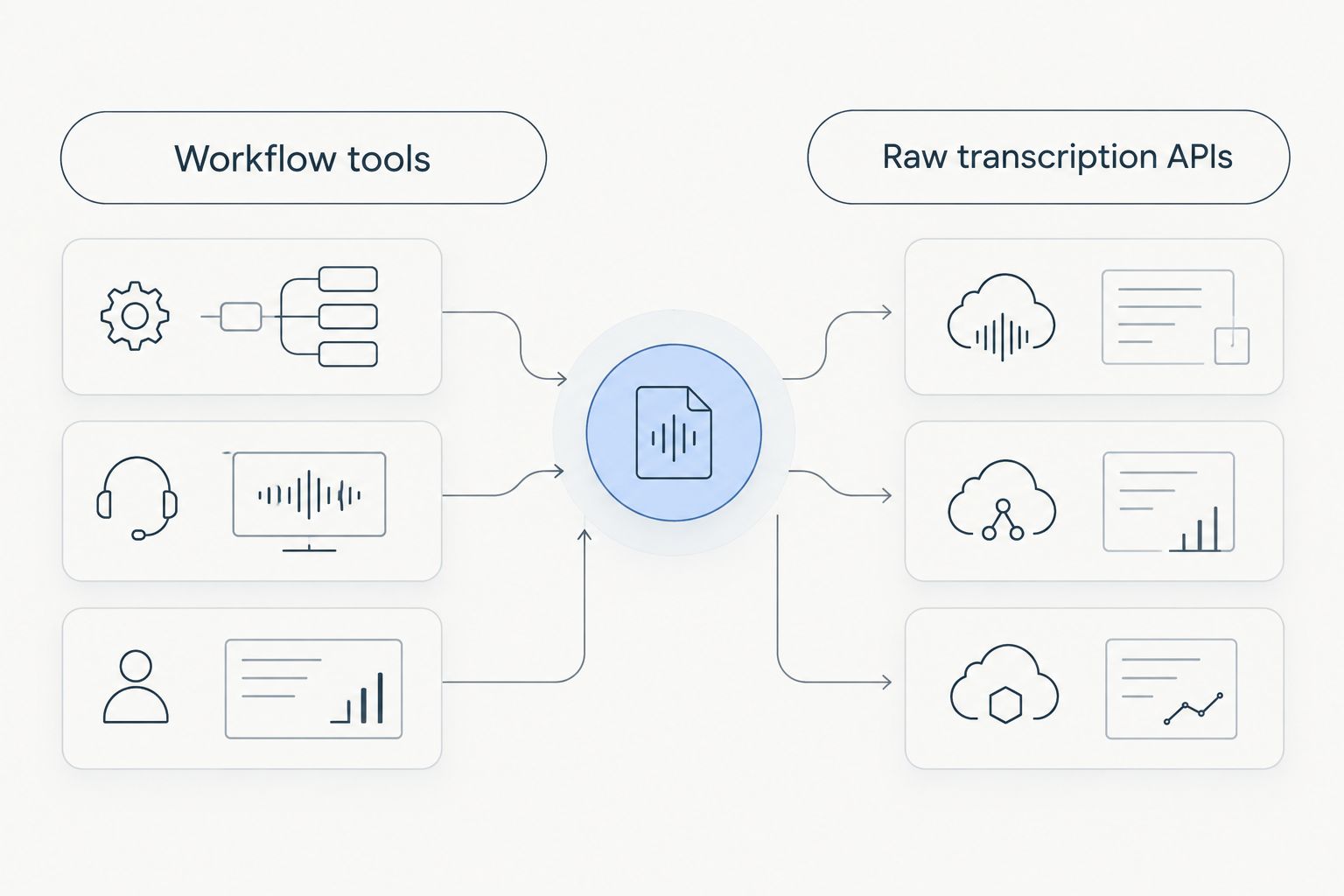
The gap between "we transcribed the call" and "the client file updated itself and a follow-up message is ready to send" is the real dividing line among these seven tools in 2026. Some are raw speech-to-text engines. Others are built to finish the job.
What makes the best Hebrew AI call transcription tool
- Hebrew accuracy on insurance and financial jargon — policy terms and product names, not just conversational Hebrew
- Integration with the systems agents already use — CRMs like Surense or Roeto, WhatsApp, email, calendar
- Real-time or near-real-time output — transcripts ready minutes after the call, not hours
- Data handling for financial services — where recordings and transcripts live and who can access them
- Actionability — does the transcript turn into a drafted follow-up or client-file update, or just sit as a text file
- Setup effort — a ready-made tool an agent can use immediately versus a raw API a developer has to wire up
Hebrew AI call transcription tools at a glance
| Tool | Best for | Standout feature | Key limitation |
|---|---|---|---|
| Goldy | Insurance and financial agents automating the full follow-up workflow | Turns Hebrew call transcripts into drafted client messages and CRM updates for approval | Built for agent workflows, not a general-purpose transcription API |
| NICE CXone | Large enterprise contact centers | Hebrew speech analytics built into a broader interaction analytics platform | Sized and priced for enterprise contact center deployments |
| Verbit | Compliance-grade Hebrew transcription and captioning | Speech recognition built around accuracy and accessibility standards | Focused on transcription and captioning, not follow-up automation |
| Voicenter | Israeli SMB call centers | Call recording and transcription integrated with Israeli telephony and PBX setups | Telephony-centric, less built for individual agent workflows |
| Amazon Transcribe | Developers building a custom pipeline | Hebrew (he-IL) language support as part of AWS's broader speech-to-text API | Requires engineering work to connect to a CRM or messaging tool |
| Google Cloud Speech-to-Text | Multilingual agencies needing broad language coverage | Documented support for more than 125 languages and locales, including Hebrew | Same as above — an API, not an agent-ready tool |
| Microsoft Azure AI Speech | Enterprises standardized on Microsoft infrastructure | Hebrew speech-to-text inside the Azure AI ecosystem | Best value shows up when already running on Azure |
1. Goldy: best Hebrew AI call transcription tool for insurance and financial agents
Goldy connects to WhatsApp, email, calendar, and CRM systems like Surense or Roeto, then transcribes Hebrew calls and turns them into updated client files and drafted follow-up messages for the agent to approve. It's built specifically for insurance and financial agents in Israel, not as a general transcription tool for any industry.
Goldy pros:
- Transcribes Hebrew calls and updates the client file automatically
- Drafts client follow-up messages for approval instead of leaving the agent to write them
- Connects directly to CRMs agents in Israel already use, like Surense and Roeto
Goldy cons:
- Value depends on connecting it to an existing CRM and calendar setup
- Not designed as a standalone transcription API for developers or other industries
Verdict: Buy — the only tool on this list built around the full insurance-agent workflow, not just the transcript.
2. NICE CXone: best for large enterprise contact centers
NICE, headquartered in Israel, builds CXone as part of a broader interaction analytics platform used by contact centers globally, with Hebrew speech analytics as one piece of that stack.
NICE CXone pros:
- Hebrew transcription sits inside a full contact center analytics suite
- Built for high call volume and enterprise-scale QA
NICE CXone cons:
- Sized for enterprise contact centers, not a single agent's desk
- Heavier setup than a purpose-built agent tool
Verdict: Hold — worth it if you already run an enterprise contact center; overkill for a solo agent or small agency.
3. Verbit: best for compliance-grade Hebrew transcription
Verbit is an Israeli speech recognition company known for transcription and captioning built around accuracy and accessibility standards, with Hebrew as a home-market language.
Verbit pros:
- Strong focus on transcription accuracy and accessibility compliance
- Native strength in Hebrew as an Israeli company
Verbit cons:
- Built for transcription and captioning, not follow-up drafting or CRM updates
- Less useful if your goal is finishing the workflow, not just the text
Verdict: Hold — a solid pick if captioning and compliance-grade transcripts are the actual goal.
4. Voicenter: best for Israeli SMB call centers
Voicenter is an Israeli cloud telephony company offering call recording and transcription integrated with the PBX and telephony setups many Israeli call centers already run.
Voicenter pros:
- Transcription tied directly to existing Israeli telephony infrastructure
- Familiar to call centers already using Voicenter for calls
Voicenter cons:
- Telephony-first, agent-workflow-second
- Less built for individual insurance or financial agents outside a call center
Verdict: Wait — worth a look only if you're already on Voicenter's telephony stack.
5. Amazon Transcribe: best for developers building a custom pipeline
Amazon Transcribe is AWS's speech-to-text API, supporting Hebrew (he-IL) alongside dozens of other languages, meant to be wired into a custom application rather than used as a finished product.
Amazon Transcribe pros:
- Hebrew language support inside a mature AWS API
- Flexible for teams building their own transcription pipeline
Amazon Transcribe cons:
- Raw API — no CRM update or follow-up drafting out of the box
- Requires engineering time to connect to WhatsApp, email, or a CRM
Verdict: Skip — unless you have a developer ready to build the workflow around it.
6. Google Cloud Speech-to-Text: best for multilingual agencies
Google Cloud Speech-to-Text documents support for more than 125 languages and locales, including Hebrew, making it a fit for agencies handling calls in several languages, not just Hebrew.
Google Cloud Speech-to-Text pros:
- Broad language coverage beyond Hebrew
- Backed by Google's infrastructure and ongoing API updates
Google Cloud Speech-to-Text cons:
- Same limitation as Amazon Transcribe: an API, not an agent-ready tool
- No built-in follow-up drafting or CRM sync
Verdict: Skip — a fit for multilingual pipelines, not for a single Hebrew-speaking agent's daily workflow.
7. Microsoft Azure AI Speech: best for Microsoft-standardized enterprises
Azure AI Speech offers Hebrew speech-to-text as part of Microsoft's AI services, which makes the most sense for organizations already running on Azure infrastructure.
Azure AI Speech pros:
- Hebrew support inside a broader Microsoft AI ecosystem
- Straightforward for teams already on Azure
Azure AI Speech cons:
- Least value if you're not already on Microsoft infrastructure
- Same API-not-workflow limitation as the other raw transcription services
Verdict: Skip — only makes sense as an add-on inside an existing Azure deployment.
How we ranked
Each tool was weighed against the six criteria above: Hebrew accuracy on financial jargon, CRM and messaging integration, transcript speed, data handling, whether output turns into action, and setup effort. Tools built for agent workflows scored higher on actionability; raw APIs scored higher on flexibility but lower on setup effort.
See Goldy on a real Hebrew call
Watch how a transcript becomes a drafted follow-up an agent approves.
Which Hebrew AI call transcription tool should you choose in 2026?
If you're an insurance or financial agent in Israel and you want Hebrew call transcription that also updates the client file and drafts the follow-up, Goldy is the default pick for 2026. If you run an enterprise contact center, NICE CXone fits the scale. If you have engineering resources and want to build something custom, Amazon Transcribe or Google Cloud Speech-to-Text give you the raw material. For everyone in between, the honest answer is: pick the tool that finishes the job, not just the one that produces the best transcript.
FAQ
What's the best Hebrew AI call transcription tool for insurance agents in 2026?
Goldy is the best fit for insurance and financial agents in Israel because it transcribes Hebrew calls and turns them into updated client files and drafted follow-ups, not just text output.
Is Goldy better than NICE CXone for Hebrew transcription?
Goldy is built for individual insurance and financial agents, while NICE CXone is built for enterprise contact centers running Hebrew speech analytics at scale. The right choice depends on whether you're one agent or a large call center.
How much does Hebrew AI call transcription cost in 2026?
Cost depends on call volume and whether you need a packaged workflow tool or a raw transcription API. Check current pricing directly with each vendor before comparing.
Can Amazon Transcribe or Google Speech-to-Text transcribe Hebrew accurately?
Both support Hebrew as a documented language, with Google Cloud Speech-to-Text covering more than 125 languages and locales overall. Neither turns a transcript into a follow-up or CRM update on its own.
Do Hebrew transcription tools integrate with CRMs like Surense or Roeto?
Goldy connects directly to CRMs such as Surense and Roeto to update client files from call transcripts. Raw transcription APIs like Amazon Transcribe or Azure AI Speech require custom integration work to reach a CRM.
Is real-time Hebrew transcription available for phone calls in 2026?
Enterprise platforms like NICE CXone and cloud APIs like Azure AI Speech and Google Cloud Speech-to-Text support near-real-time transcription, though speed depends on setup and call routing.
What's the difference between a transcription tool and a virtual employee tool like Goldy?
A transcription tool converts speech to text and stops there. Goldy takes that Hebrew transcript and updates the client file and drafts a follow-up message for the agent to approve.
Do these tools handle Hebrew insurance and financial jargon well?
Tools built specifically for the insurance and financial workflow, like Goldy, are tuned around that vocabulary. General-purpose APIs handle conversational Hebrew but weren't built around policy or financial terminology specifically.
One last thing
By 2026, Hebrew speech-to-text itself is close to a solved problem — Amazon Transcribe, Google Cloud Speech-to-Text, and Azure AI Speech all support Hebrew out of the box. The real gap between these seven tools isn't accuracy, it's whether the transcript turns into a drafted client message an agent can approve in seconds, or just another text file that still needs to be read, summarized, and acted on by hand.